
A coding bootcamp can cost $10,000 or more, a university degree far more — and yet the same skills are taught for free on the internet. The best free websites to learn high-income skills are not a secret: freeCodeCamp, Coursera, Google Digital Garage, HubSpot Academy and others give away professional training that students once had to pay thousands for. This guide lists exactly 10 free websites, explains what each one is actually free for, and gives you a realistic 90-day plan to go from zero to your first paid work.
What Counts as a High-Income Skill in 2026?
A high-income skill is a skill that businesses and clients will pay well for, that you can learn in months rather than years, and that you can sell without a degree. In 2026 the strongest examples are web development, data analytics, digital marketing, copywriting, graphic design, and video editing. Freelancers in these fields commonly charge $15 to $50 an hour as beginners and $60 to $150 an hour with a portfolio.
Three things separate a genuinely useful skill from a hobby: real demand, visible proof of work, and learning by doing. A finished website or design lets a client judge you without a certificate. Every website in this list teaches at least one skill that meets all three tests. Still choosing? See our guide to the 7 freelance skills students can learn in 30 days.
The 10 Best Free Websites to Learn High-Income Skills
Every website below is free to learn on — no credit card, no trial that quietly converts to a paid plan. Some charge for a certificate or graded assignments, and each entry says so honestly.
| Website | Best for | Free certificate? |
|---|---|---|
| freeCodeCamp | Coding and web development | Yes — free |
| Coursera | University courses (audit) | Only with financial aid |
| Google Digital Garage | Digital marketing | Yes — free |
| HubSpot Academy | Marketing, sales, content | Yes — free |
| Khan Academy | Foundations and maths | No certificates |
| edX | Harvard and MIT courses (audit) | Paid verified certificate |
| YouTube | Tutorials for every skill | No certificates |
| MIT OpenCourseWare | University-level lectures | No certificates |
| Canva Design School | Graphic design for beginners | No certificates |
| Alison | Short courses, many fields | Some free, some paid |
1. freeCodeCamp — Coding and Web Development
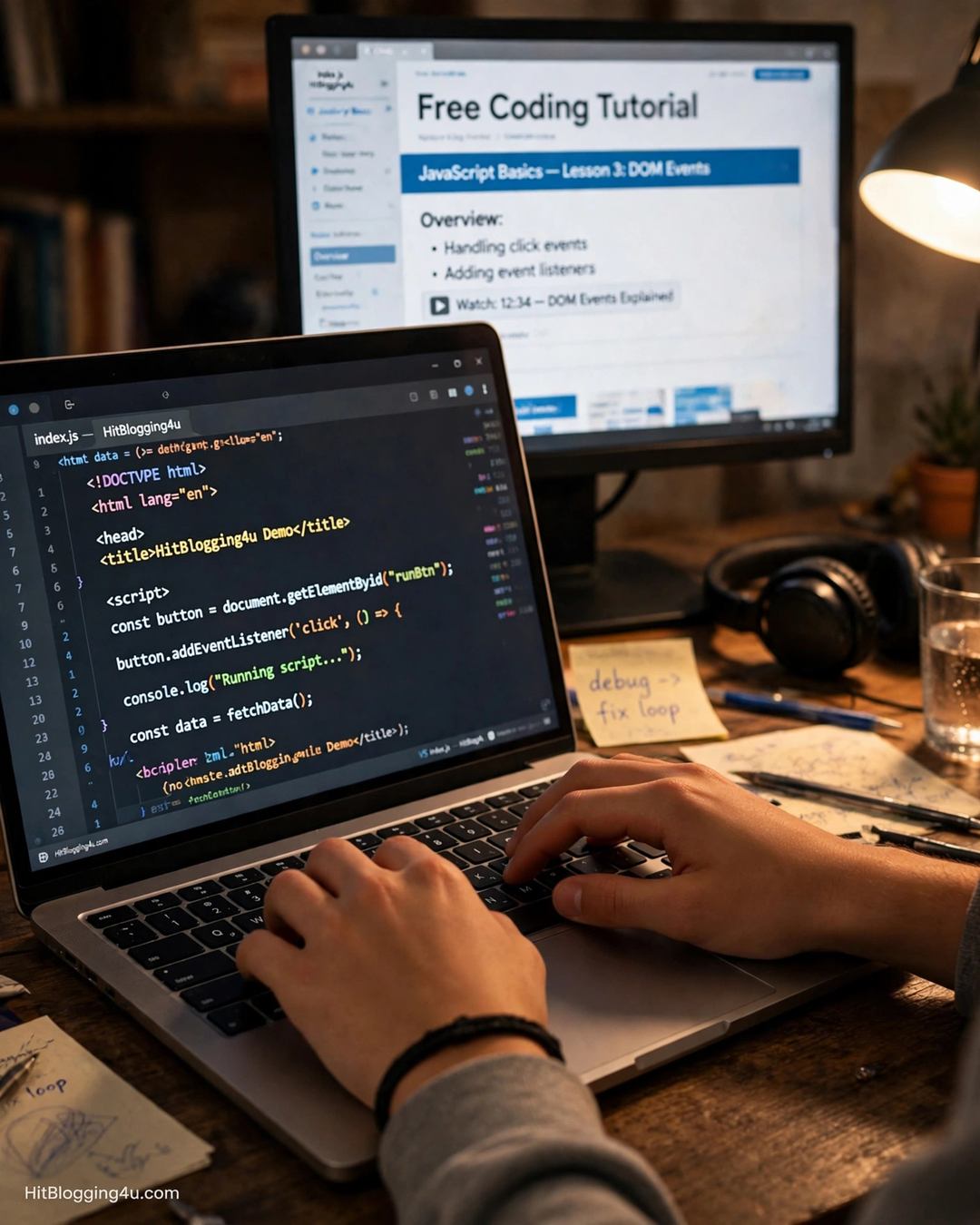
freeCodeCamp is a nonprofit that teaches coding entirely for free — no paywall, no premium tier, no trial period. Its curriculum covers web design, JavaScript, React, back-end development, Python, data analysis, and machine learning, running to more than 3,000 hours. Each certification is earned by completing five real projects.
What is genuinely free: everything — all lessons, all projects, and all verified certificates.
Best for: students who want to become web developers, and anyone who wants a free certificate employers recognise.
Practical tip: finish one certification — Responsive Web Design is the natural first one, at roughly 300 hours — and put its five projects on GitHub. That is your first portfolio.
2. Coursera — University Courses You Can Audit for Free
Coursera partners with universities such as Stanford, Yale, and the University of Michigan, and with companies such as Google, Meta, and IBM. The courses that matter most are the Google Career Certificates — Data Analytics, UX Design, IT Support, and Cybersecurity — plus Python for Everybody.
What is genuinely free: audit mode. You can watch all the lectures and read the materials for free on most courses. Graded assignments, the certificate, and full specialisations cost money — but financial aid, applied for course by course, can make the full course free, usually within about 15 days.
Best for: students who want a university or big-company name on their learning, especially data analytics, UX design, and project management.
Practical tip: enrol in audit mode first and finish two weeks of lectures before applying for financial aid.
3. Google Digital Garage — Digital Marketing With a Free Certificate
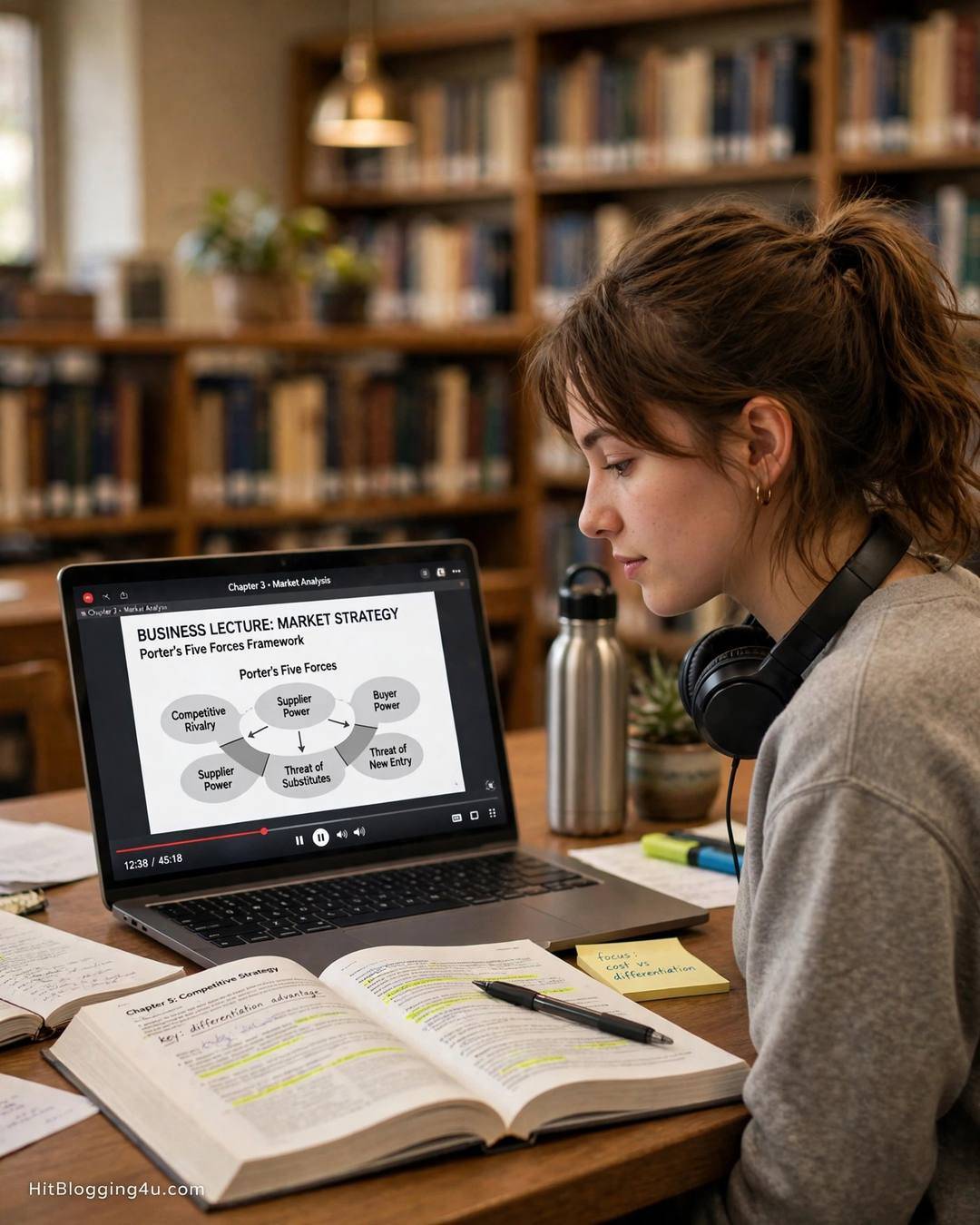
Google Digital Garage is Google’s own free learning platform, built for people with no marketing background. Its flagship course, Fundamentals of Digital Marketing, takes about 40 hours and covers SEO, search advertising, social media, email marketing, and analytics — with a free certificate recognised by the Interactive Advertising Bureau Europe. Google Skillshop, its sister platform, adds free training in Google Ads and Analytics.
What is genuinely free: all courses and the certificate. There is no paid tier and no upsell.
Best for: beginners who want a recognised certificate quickly, and students who want to offer digital marketing services to small businesses.
Practical tip: add the certificate to your LinkedIn profile the day you earn it, then offer a free one-page marketing audit to one local business.

4. HubSpot Academy — Marketing, Sales, and Content
HubSpot Academy is the free training arm of HubSpot, one of the world’s biggest marketing software companies, and every course is completely free. The most useful certifications for students are Inbound Marketing, Content Marketing, Email Marketing, Social Media Marketing, SEO, and Digital Advertising. Most courses take 2 to 5 hours.
What is genuinely free: all courses and all certificates. HubSpot gives the training away because it wants people to know its tools.
Best for: students who want to freelance in marketing, write content, or manage social media accounts for small businesses.
Practical tip: take the Inbound Marketing, Content Marketing, and SEO certifications together — they overlap heavily — then write three sample blog posts.
5. Khan Academy — Rock-Solid Foundations for Free
Khan Academy is a nonprofit that offers a complete, structured education entirely for free, with no ads, no subscriptions, and no hidden charges. It covers maths, statistics, computing, economics, and personal finance from school level up to early university level. It does not teach freelancing directly, but it teaches the foundations behind the high-income skills.
What is genuinely free: everything. Khan Academy has no paid tier and offers no certificates, because its focus is mastery, not credentials.
Best for: students starting from zero, anyone who needs to fill gaps in maths or computing, and learners who prefer short videos with exercises.
Practical tip: if a coding or data course feels confusing, spend a week on the Khan Academy statistics unit first. Most beginners who quit coding quit because of the maths underneath it, not the code.
6. edX — Harvard and MIT Courses, Free to Audit
edX hosts courses from Harvard, MIT, Berkeley, and other top universities. The most famous is Harvard’s CS50, an introduction to computer science and one of the best beginner programming courses in the world. You can audit most edX courses for free, which gives you the lectures, readings, and discussion forums.
What is genuinely free: audit access, which covers the full course content. The verified certificate is paid, and free audit access usually lasts only for the posted length of the course, so check the dates before you enrol.
Best for: students who want deep, university-level computer science and a famous course name to talk about in interviews.
Practical tip: start with CS50 and do the weekly problem sets rather than only watching the lectures. At a few hours a week it takes about 11 weeks.
7. YouTube — Free Tutorials for Almost Every Skill
YouTube is the most underrated learning platform on this list. Thousands of professionals teach coding, video editing, SEO, design, copywriting, and data analysis there, entirely free. Reliable starting points include Traversy Media for web development, the freeCodeCamp channel for programming, and HubSpot for marketing.
What is genuinely free: everything you watch. The costs are your time and your discipline — there is no structure, no certificate, and no one checking your progress.
Best for: video editing, practical walkthroughs, and any skill best learned by watching.
Practical tip: never learn from random videos. Pick one creator’s structured playlist, watch it in order, and do the exercise in every video before moving on. One finished playlist beats fifty half-watched videos.
8. MIT OpenCourseWare — Real MIT Lectures, Completely Free
MIT OpenCourseWare publishes the actual teaching materials from MIT courses — lecture videos, notes, assignments, and exams — for anyone to use, free of charge. You can study computer science, mathematics, economics, and business from the same materials MIT students use, at your own pace, with no enrolment needed.
What is genuinely free: all course materials. There is no certificate, no grading, and no interaction with teachers — this is a library, not a classroom.
Best for: self-driven learners who want deep, university-level material and do not need a certificate to stay motivated.
Practical tip: choose one course and treat it like a real class: watch one lecture a week and actually do the assignments. Do the problem sets — that is what makes the skill stick.
9. Canva Design School — Graphic Design for Beginners
Canva Design School teaches graphic design inside Canva itself, the free design tool that millions of small businesses use. Its short tutorials cover social media graphics, logos, presentations, posters, and brand kits, alongside design basics such as colour and typography. You learn in the same tool you will use for client work, so there is no gap between learning and doing.
What is genuinely free: all tutorials and the free version of Canva, which is powerful enough for most beginner client work. Canva Pro is paid, but you do not need it to learn or to start earning.
Best for: creative students who want to sell social media graphics, presentations, and simple branding to small businesses.
Practical tip: recreate 10 designs you admire first — it teaches you layout faster than any lesson — then design three original pieces for imaginary businesses and put them in a portfolio. Clients hire designers with visible work.
10. Alison — Free Courses and Certificates Across Dozens of Fields
Alison is one of the world’s largest free learning platforms, with more than 4,000 courses across IT, business, project management, languages, sales, and health. Many courses take only 2 to 3 hours — a student can finish a course between classes.
What is genuinely free: all course content. Certificates and diplomas are available for many courses, though some require a fee for the official certificate.
Best for: students who want short, practical courses in many different fields, and anyone who wants a certificate quickly to strengthen a freelance profile.
Practical tip: use Alison for breadth, not depth. Take one short course to test a field, and if you like it, move to Coursera or freeCodeCamp to master it.
How to Pick the Right Website for You
Ten websites is too many to use at once, so pick one based on your goal, not on which platform looks most popular.
Fastest way to earn: Google Digital Garage or HubSpot Academy. Their courses take days, not months, the certificates are free, and you can offer a simple service — social media management, email campaigns, or a basic SEO audit — within a few weeks. Digital marketing lets beginners land a first client in under 60 days.
Highest long-term income: freeCodeCamp or edX. Coding takes longer — expect 3 to 6 months before paid projects — but web developers charge the highest freelance rates on this list.
Creative rather than technical: Canva Design School and YouTube. Design and video editing are easier to start, and the tools are free.
Not sure what you enjoy: spend one week on Alison trying short courses in three different fields, then commit to the one that held your attention. Trying three things for a week beats spending three months on the wrong one.
One rule applies whichever website you pick: finish one course completely before starting another. If you want to turn the skill into paid work quickly, read our guide on how to start freelancing as a student with no experience.
A Realistic 90-Day Plan to Learn a High-Income Skill for Free
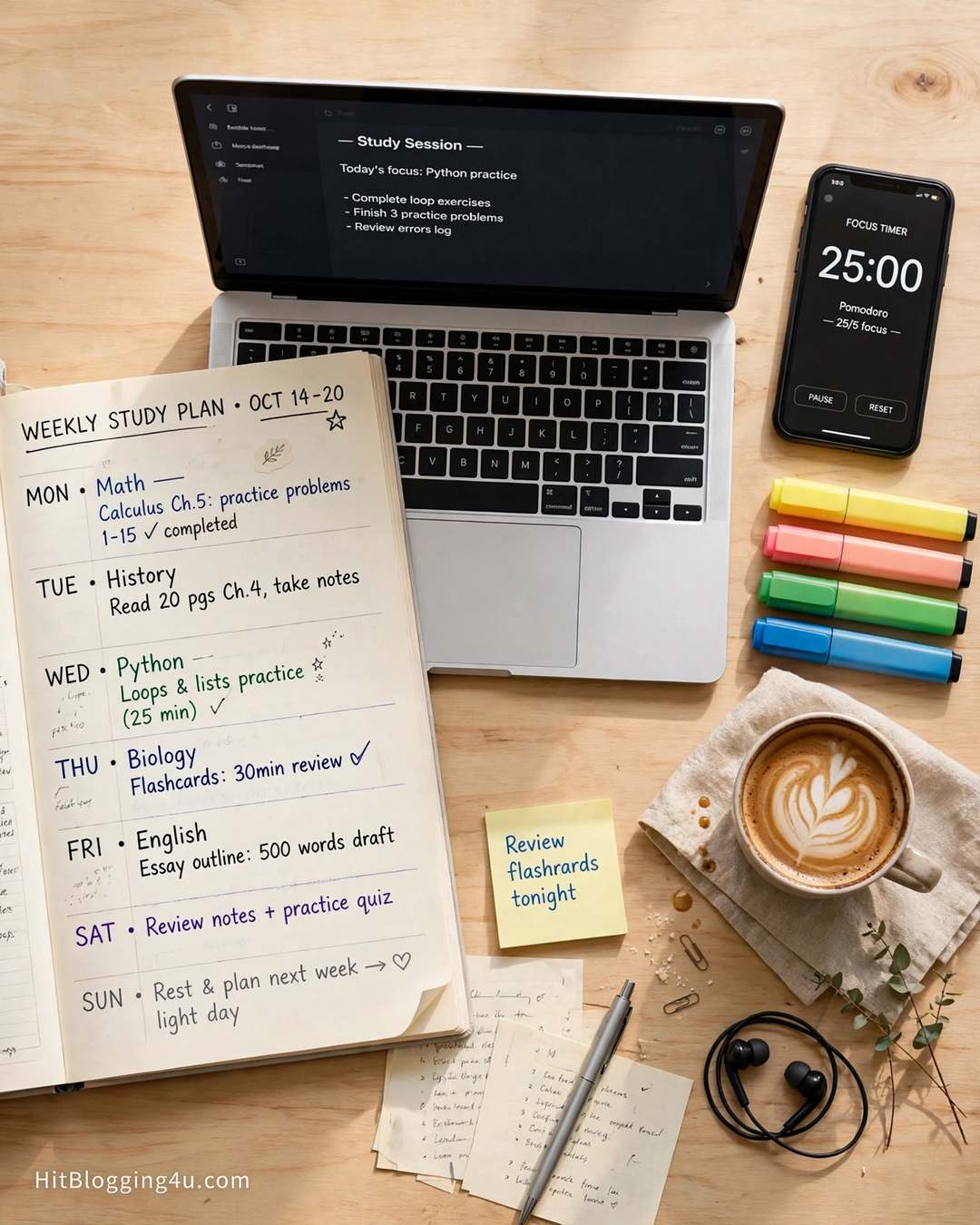
Learning a skill is only half the job — the other half is proving it and getting paid. This plan fits around classes at 1 to 2 hours a day.
Weeks 1–2: Pick one skill and one website. Use the guide above, choose a single skill, and enrol in one course. Tell a friend your goal and your deadline.
Weeks 3–6: Finish the course. Study 1 to 2 hours a day, 5 days a week. Do every exercise and assignment, not just the videos. By week 6 you should hold a finished certificate.
Weeks 7–10: Build three portfolio pieces. Make real things, even for imaginary clients. If you only have a few hours a week, our list of the best side hustles for students with only 5 hours a week shows how to fit earning around a busy timetable.
Weeks 11–13: Get your first client or job. Offer your service to one local business, apply for small freelance jobs, or apply for part-time remote work. Your first job may pay little, but it buys you a review and a testimonial. For ideas on where to apply, see the 10 part-time remote jobs for students that actually pay. Keep your schedule honest with our guide on how to balance a part-time job and your studies.
Expect the plan to slip — exams happen, motivation dips, life interrupts. A 90-day plan that takes 120 days still works. What fails is the plan that never starts.
Frequently Asked Questions
Can you really learn a high-income skill for free?
Yes. Every website in this guide is free to learn on — freeCodeCamp, Google Digital Garage, HubSpot Academy, Khan Academy, and MIT OpenCourseWare charge nothing at all, while Coursera and edX let you audit university courses for free. Only certificates or graded assignments usually cost money.
Which free website is best for complete beginners?
Google Digital Garage is the easiest first step: the Fundamentals of Digital Marketing course takes about 40 hours, needs no background knowledge, and ends with a free certificate. For coding, start with freeCodeCamp’s Responsive Web Design certification; for creative work, start with Canva Design School.
Do free certificates actually help you get work?
They help, but they are not the deciding factor. Certificates from Google and HubSpot look good on LinkedIn and freelance profiles. What wins clients is proof of work: three finished projects, a live website, or a sample campaign.
How long does it take to learn a high-income skill?
Most students reach a beginner-to-intermediate level in 3 to 6 months at 1 to 2 hours a day. Marketing and design can produce a first client in 4 to 8 weeks; coding and data usually take 3 to 6 months.
Which high-income skill is easiest to learn as a student?
Digital marketing and graphic design are the easiest to start: the tools are free, the learning curve is gentle, and you can produce visible work within weeks. Coding and data pay more in the long run but take longer to learn.
Do I need a degree to earn from these skills?
No. Clients and employers in freelancing, marketing, design, and development hire on the basis of skill and proof of work, not degrees. For freelance and remote work, your portfolio, reviews, and ability to deliver are what matter.
Conclusion
The best free websites to learn high-income skills are already open in your browser — the only thing they cost is your time and consistency. Pick one skill, pick one website, and block one hour today to start your first lesson. Finish the course, build three portfolio pieces, and offer your work to one real client within 90 days. You do not need money to learn or a degree to earn.