
Learning how to start a student blog is one of the smartest side projects a student can pick up. It costs almost nothing, teaches writing, marketing, and tech skills employers want, and — unlike most student side hustles — it can keep earning long after the work is done. A post you write on a Sunday can still bring in readers, and income, a year later.
But be honest from the start: most student blogs earn nothing in the first months, and many never earn much at all. That is not a reason to skip blogging — it is a reason to start with realistic expectations, pick a topic you can stick with, and treat the blog like a small business instead of a lottery ticket. This guide covers the honest math, choosing a niche, setting up in a weekend, your first ten posts, and how a student blog actually makes money.
If you only have a few hours a week, that is enough. One good post a week beats ten rushed posts in a weekend followed by three months of silence.
Can Students Really Earn Money From Blogging? The Honest Math
Yes, students can make money blogging — but slower than most YouTube videos suggest. Surveys paint a consistent picture: roughly a third of bloggers make nothing at all, and only about one in ten earns more than $10,000 a year. The Productive Blogging 2026 survey found bloggers in years three to five average around $750 a month. Blogging pays people who stick with it for years.
For a student, that is good news — no full-time salary to replace. Even $50 to $200 a month covers textbooks, a phone bill, or a few nights out — and it comes from an asset you own. Compare that with most side hustles for students with only 5 hours a week, where income stops the moment you stop working. A blog is one of the few student projects where the work compounds.
Here is a realistic timeline, assuming one or two posts a week:
- Months 1–3: $0. You are building content and learning.
- Months 4–6: $0–$20. A few affiliate clicks trickle in.
- Months 6–12: $20–$150 a month, once 20–30 solid posts are live.
- Year 2 and beyond: $150–$750+ a month for consistent bloggers in a decent niche.
The honest answer to “how long until a blog makes money?” is usually six to twelve months. Anyone promising income in your first week is selling you a course, not a strategy. Before you commit, compare blogging with our list of secret websites to make money online — but know that blogging is the one where the ceiling is highest.
Pick a Niche You Can Actually Write About

Your niche is the topic your blog covers. The classic advice is “follow your passion,” but the better advice is “follow what you can write about 50 times without getting bored, and what other people actually search for.” You will need dozens of posts before the money shows up, so stamina matters.
Good student niches share three traits: you know enough to write helpfully, people search for answers in the topic, and there is something to sell or recommend:
- Personal finance and budgeting for students: budgeting, saving, student discounts, part-time income. Advertisers pay well here.
- Study and productivity: study techniques, note-taking, exam prep, app reviews. If you tutor, this pairs perfectly — see our guide on how to become an online tutor as a college student.
- Tech and gadget reviews: budget laptops, headphones, phones, study gear. Affiliate commissions on tech are solid.
- Your field of study: nursing, engineering, law, design — whatever you are studying. Explaining your subject to beginners is a niche few others can copy.
- Budget cooking and dorm food: cheap recipes and meal prep. Huge search volume, easy affiliate links to kitchen gear.
Avoid niches that are too broad (“lifestyle”) or too narrow (“my thoughts on Tuesdays”). “Budget meals for hostel students” beats “food blog” every time. And avoid niches you have no connection to.
Quick test: can you list 20 post titles in your niche right now, without research? If yes, the niche has legs. If you struggle past five, keep looking.
How to Start a Student Blog: Set Up in a Weekend
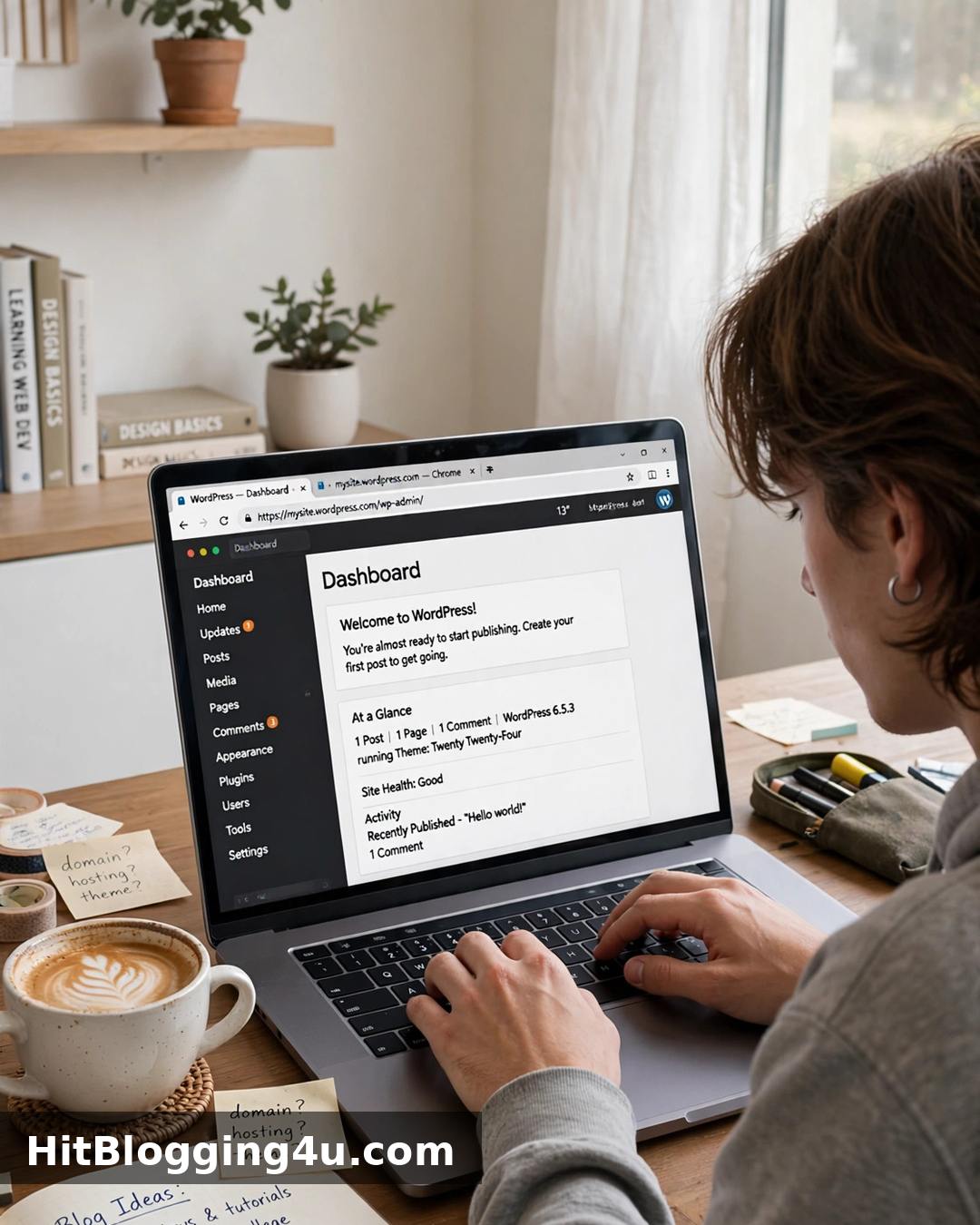
Setting up a student blog takes one weekend afternoon. The biggest decision is free versus self-hosted.
Option 1: Free Platforms (Blogger or WordPress.com)
You can start for free on Blogger or the free plan of WordPress.com — no money, no technical setup, first post live within the hour. A fine way to test whether you enjoy blogging.
The catch: you do not fully own the blog. Your address looks like yourblog.blogspot.com, you have limited control over ads and design, and moving later is a hassle. Treat free as a trial run.
Option 2: Self-Hosted WordPress.org (Recommended)
Self-hosted WordPress is the long-term pick for almost every serious blogger. You buy a domain name (around $10–$15 a year) and a basic hosting plan, install WordPress with one click, and you own everything: the design, the ads, the data, and the income. Full setup guide and downloads are at WordPress.org.
First-year costs can come in under $50 with a discounted starter hosting plan (often $2–$3 a month) plus a domain. After that, expect roughly $50–$100 a year.
Your Weekend Setup Checklist
- Buy your domain: short, easy to spell, related to your niche. Avoid numbers and hyphens.
- Get starter hosting: any reputable shared host with one-click WordPress install.
- Install WordPress and a clean, fast theme: skip heavy page builders — speed matters for ranking.
- Install the essentials: an SEO plugin, a backup plugin, Google Analytics, and Google Search Console.
- Write your About page: who you are and who the blog helps.
- Publish your first post: do not wait for perfection.
Your First 10 Posts: A Content Plan That Ranks

Your first ten posts decide whether Google takes your blog seriously. New blogs have almost no authority, so early content must target specific questions real people type into search. You will not outrank a major site for “how to save money,” but you can rank for “how to save money as a student in a hostel”.
Here is a content plan that works for almost any student niche. Write these in order:
- Your best beginner guide: the single most useful post in your niche (aim for 1,500+ words).
- A list post: “10 Cheap Meals for Students” or “7 Free Study Apps That Actually Help.”
- A how-to post: a step-by-step answer to one specific question.
- A comparison post: “X vs Y” — people search these right before deciding.
- A personal experience post: what you tried, what worked, what did not.
- A mistake post: “7 Mistakes New Students Make With Money.”
- A resource roundup: the tools, apps, or sites you actually use.
- A question-answering post: answer one question from Google’s “People also ask” box.
- A seasonal post: back-to-school, exam season, semester start.
- An update post: revisit your first post after a month and improve it.
Rules for every post: write at least 1,000 words for posts you want to rank; use the exact question people search for in your title and first paragraph; add a FAQ section; and link every new post to at least one older post.
How a Student Blog Actually Earns Money

Once you know how to start a student blog, the money question becomes: where does the income come from? Not one magic source — several small streams that add up. Here are the five that matter, in the order most student bloggers see income.
1. Affiliate Marketing — Your First Income
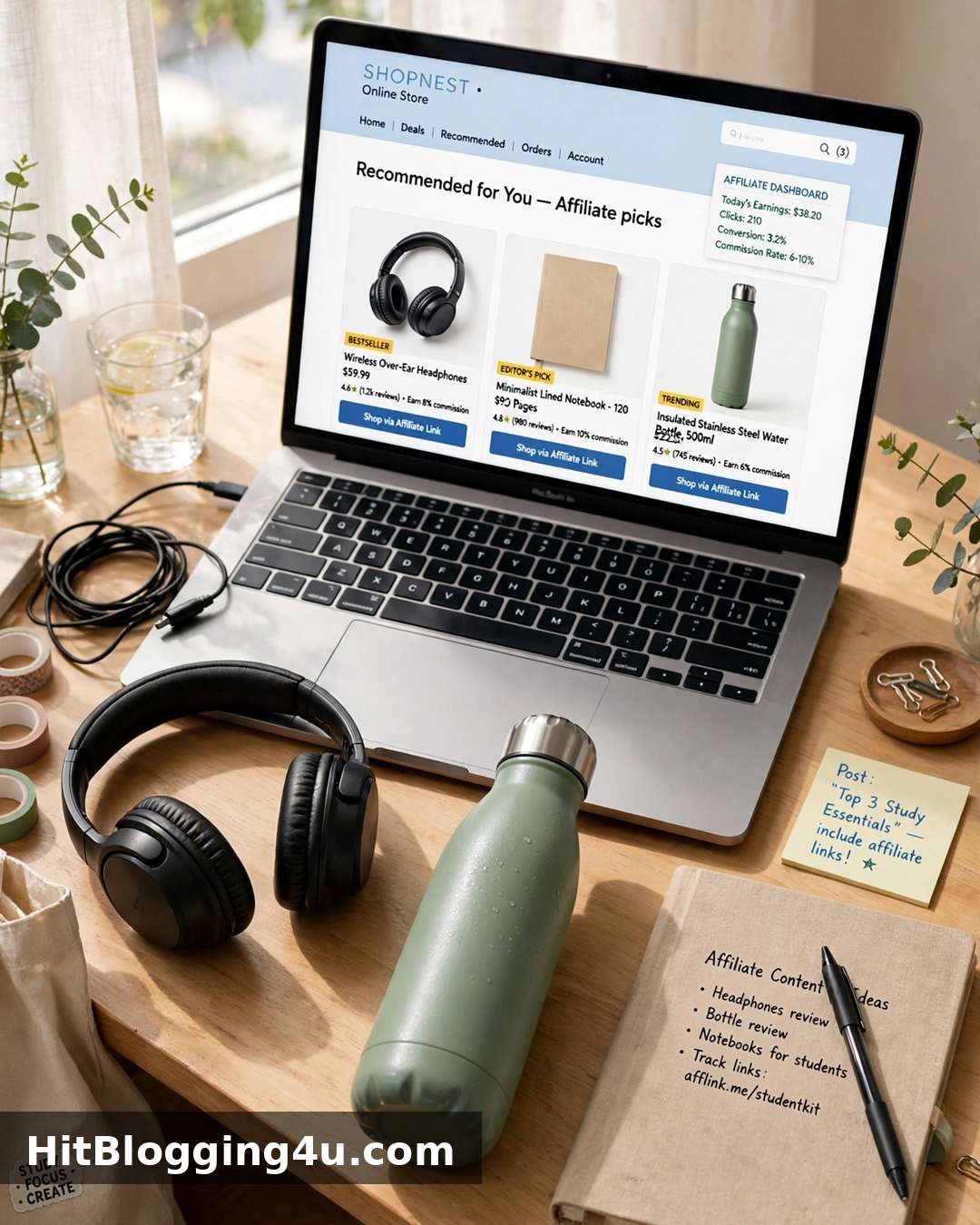
Affiliate marketing means recommending products you genuinely use and earning a commission when a reader buys through your link. It works from day one — no traffic minimums, no ad-network approval.
Start with products you already own and love: your laptop, your headphones, the planner you use. Write honest reviews and comparison posts, and place your affiliate links naturally inside the content — Amazon Associates is the easiest starting point. Always disclose affiliate links, and never recommend something you have not tried.
2. Google AdSense — The Slow Burn
Google AdSense places ads on your blog and pays you when visitors see or click them. It is the most passive blog income, but AdSense typically wants 20–30 posts and steady visitors before approving a new blog.
A rough guide: 10,000 monthly visitors might earn $50–$150 a month from AdSense — finance and tech pay more per click than entertainment. Apply at Google AdSense once you have 20+ quality posts and a few months of traffic history.
3. Sponsored Posts — For Established Blogs
Sponsored posts are paid articles where a brand pays you to write about their product. They pay best per post — often $50–$500 for a small blog — but brands usually want around 10,000–25,000 monthly visitors first. This is a year-two income stream.
When offers arrive, be picky: only accept sponsors that fit your niche. One paid post for a product your student readers cannot afford damages your credibility.
4. Digital Products — Sell What You Already Make
Digital products are the highest-margin income a student blogger can build: study notes, templates, printables, presets, or a short guide. You make them once and sell them forever. Our guide to selling digital products as a student covers the details — start with one simple product, like a revision template pack, priced low ($3–$10).
5. Freelance Services — Your Skills, Your Blog as Proof
Your blog is also a portfolio: a student who blogs about design can sell design work; one who writes about marketing can sell writing. Use your blog to prove your skills, then offer services to readers and local businesses. See how to start freelancing as a student with no experience — freelancing often earns more, faster, than the blog itself.
Grow Traffic on a Student Schedule
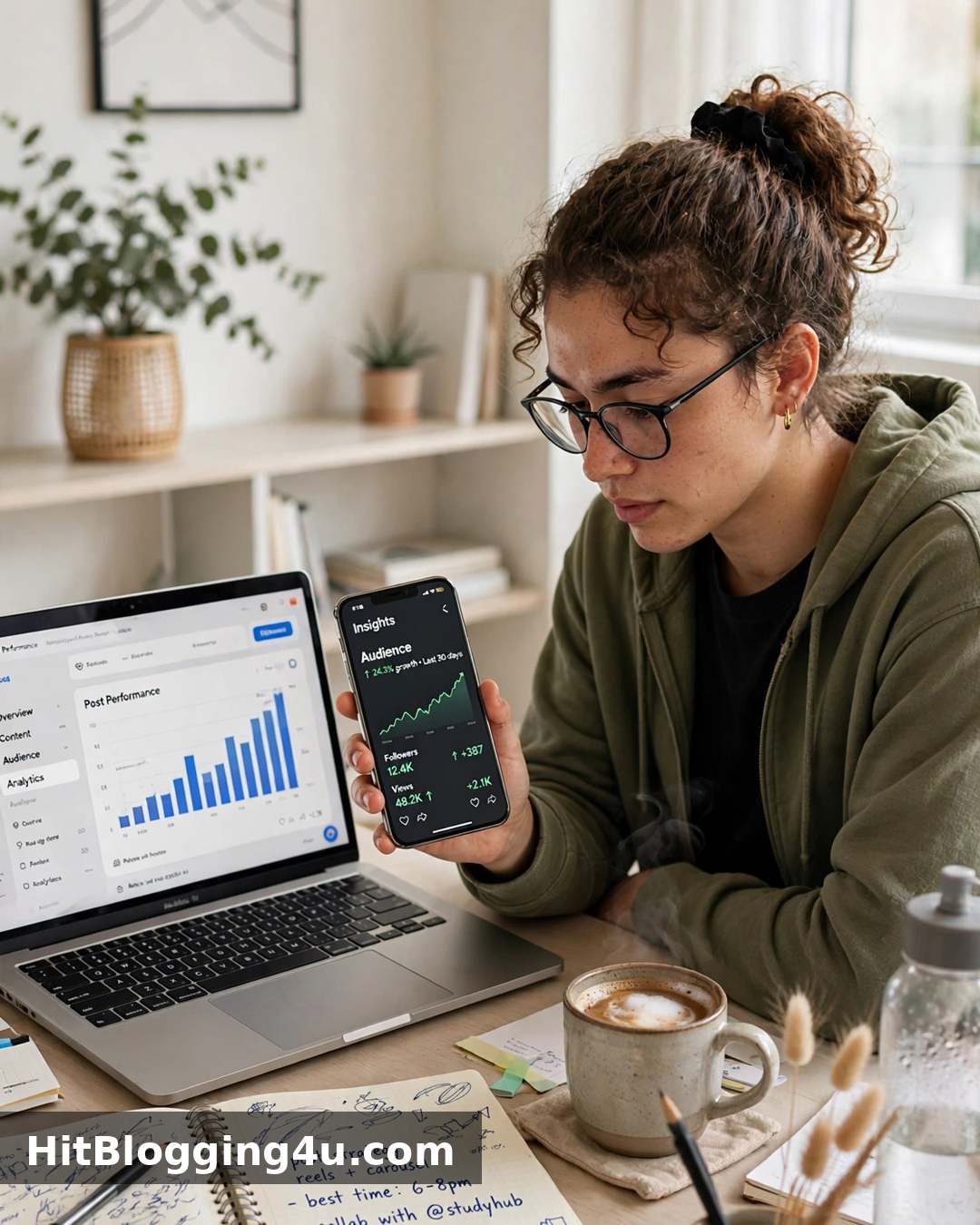
Traffic is the fuel for every income stream above, and as a student you have less time to chase it than a full-time blogger. Focus on the two channels that give the best return for the least time: search and Pinterest.
SEO basics: every post should target one main keyword, use it in the title, first paragraph, and at least one heading, and answer the searcher’s question better than the top results. Keep your site fast and use descriptive image alt text. Set up Google Search Console early — it is free and shows which queries bring people to your blog.
Pinterest: Pinterest is a search engine disguised as a social network, and it is unusually kind to new blogs: it does not care how big your site is, only whether your pin looks useful. Make one tall pin per post, write a keyword-rich description, and pin consistently. Many student bloggers get their first real traffic from Pinterest before Google notices them.
Guest posting: writing for other blogs in your niche gets you links and readers, and builds relationships that later turn into collaborations and sponsored work. See our page on accepting guest posts, and pitch similar blogs with one strong post idea, not a generic “can I write for you?” email.
What to skip for now: do not try to be on every social platform. Pick one where your audience is and ignore the rest until you have 20+ posts. Posting daily on five platforms with no content to send people to is the fastest way to burn out.
7 Mistakes New Student Bloggers Make
- Quitting after a month: almost every blog earns nothing for the first three to six months. The bloggers who earn are the ones who did not quit in month two.
- Writing about everything: a blog with no clear topic confuses Google and readers alike. One niche, done well, beats five niches done badly.
- Copying other blogs: rewriting someone else’s post is not original content, and Google can tell. Your experience as a student is your edge — use it.
- Ignoring SEO entirely: beautiful writing that nobody finds earns nothing. Learn the basics: one keyword per post, clear headings, fast loading pages.
- Publishing and never updating: your first posts will be your weakest. Revisit them every few months and improve them.
- Chasing every monetization method at once: ads, affiliates, sponsors, courses, and a shop is chaos. Start with affiliate links, add AdSense at 20+ posts, and layer the rest on later.
- Spending money before earning any: premium themes, expensive courses, and paid tools can wait. A student blog should cost under $50 in year one.
FAQ
Can students make money blogging?
Yes — through affiliate marketing, ads, sponsored posts, digital products, and freelance services. Learning how to start a student blog is the first step; earning from it is the second. First income usually arrives after six to twelve months.
Do I need money to start a blog?
No — Blogger and WordPress.com are free. But a self-hosted WordPress blog costs under $50 for the first year and is better if you want to earn money long-term.
How much can a student earn from blogging?
Most earn $0–$50 a month in year one and $50–$200 in year two; a small minority reach $750+ a month after three to five years. Roughly a third earn nothing.
How long until a blog makes money?
Usually after six to twelve months. Affiliate marketing can pay sooner, sometimes within weeks; AdSense and sponsored posts need six months or more of traffic.
What is the best blogging platform for students?
WordPress.org (self-hosted) is best for earning, because you own the blog and can use any monetization method. Blogger is the best free option for testing the waters.
Do I need to be a good writer to start a blog?
No — you need to be clear and helpful, which is learnable. Write like you are explaining something to a classmate, edit once, and publish.
Learning how to start a student blog is the easy part — you can do it this weekend for less than $50. The harder part is writing consistently for six months before the money shows up. But if you pick a niche you care about, publish one good post a week, and treat your blog like a small business instead of a hobby, you will build something most students never have: an asset that earns while you study. Start this week.