
Learning how to make money on TikTok as a student is easier than most people think — and harder than the viral success stories make it look. You do not need a million followers, a fancy camera, or a gap year to start earning. You need a clear niche, videos people actually watch to the end, and two or three income streams that fit around your classes.
TikTok is one of the few side hustles that starts free, works from your dorm room, and can grow while you study. The catch is that the money does not arrive just because you post. TikTok pays creators through its own programs, but the fastest money for most students comes from brands, affiliate links, and content you make for other businesses. This guide walks through every realistic way to earn, what each one actually requires, and a 30-day plan to get your first payment.
Can Students Really Make Money on TikTok?
Yes — but the honest answer matters more than the hype. A small number of creators earn thousands a month. Most student creators earn nothing for the first few weeks, then small amounts as their audience grows. A 2026 creator economy report found that 45.6% of U.S. creators reported annual earnings between $10,000 and $100,000 — but that figure covers full-time creators, not students posting between lectures.
For a student, a realistic goal is your first $100 from a campus brand deal, your first $50 in affiliate commissions, or your first paid video for a brand. Those small wins stack up. The students who make TikTok pay treat it like a small part-time business: they pick one topic, post on a schedule, and build several income streams instead of waiting for one video to go viral.
There is one more thing to know before you start. TikTok’s own payment programs have age and follower requirements, and the rules change. Brand deals, affiliate marketing, and making videos for brands have lower barriers and usually pay sooner. Start there, and let the platform programs catch up as your account grows.
How Much Can a Student Earn on TikTok?
Earnings depend on your follower count, your niche, and which income streams you use. A student with 2,000 engaged followers in a clear niche can be more valuable to a brand than a creator with 50,000 followers and no clear audience. Here is what each path realistically pays at different stages.
| Income stream | At 1,000–5,000 followers | At 10,000–50,000 followers |
|---|---|---|
| Creator Rewards Program | Not eligible yet | Small per-view payouts; varies widely |
| TikTok Shop affiliate | A few dollars to $50/month | $100–$1,000+/month in shoppable niches |
| Brand deals / sponsored posts | Gifted products; $50–$150 per post | $200–$1,500+ per post |
| UGC videos for brands | $50–$250 per video | $150–$500+ per video |
| LIVE gifts | A few dollars per stream | $20–$200+ per stream |
| Campus ambassador roles | $100–$300 per campaign | $300–$800 per campaign |
Those numbers are ranges, not promises. A beauty or tech creator in a shoppable niche usually earns faster than a general comedy account, because brands in those niches pay for sales, not just views. Pick your niche with that in mind.
7 Ways to Make Money on TikTok as a Student
There is no single best way to earn on TikTok. The right mix depends on your follower count, your skills, and how much time you can commit. Here are the seven income streams that work best for students, starting with the ones that pay soonest.
1. Join the TikTok Creator Rewards Program

The Creator Rewards Program is TikTok’s own payment program. It replaced the old Creator Fund, and it pays eligible creators based on how their videos perform. To qualify, you need to be 18 or older, have at least 10,000 followers, and have reached 100,000 video views in the last 30 days. Your account must be a personal account in good standing, in an eligible country, and only original videos longer than one minute count toward rewards.
TikTok does not publish a fixed pay rate, so earnings vary. The program rewards watch time, engagement, and video quality — not just raw views. Treat this as bonus income, not your main plan. Most students earn their first money elsewhere long before they reach 10,000 followers.
2. Earn With TikTok Shop Affiliate Links
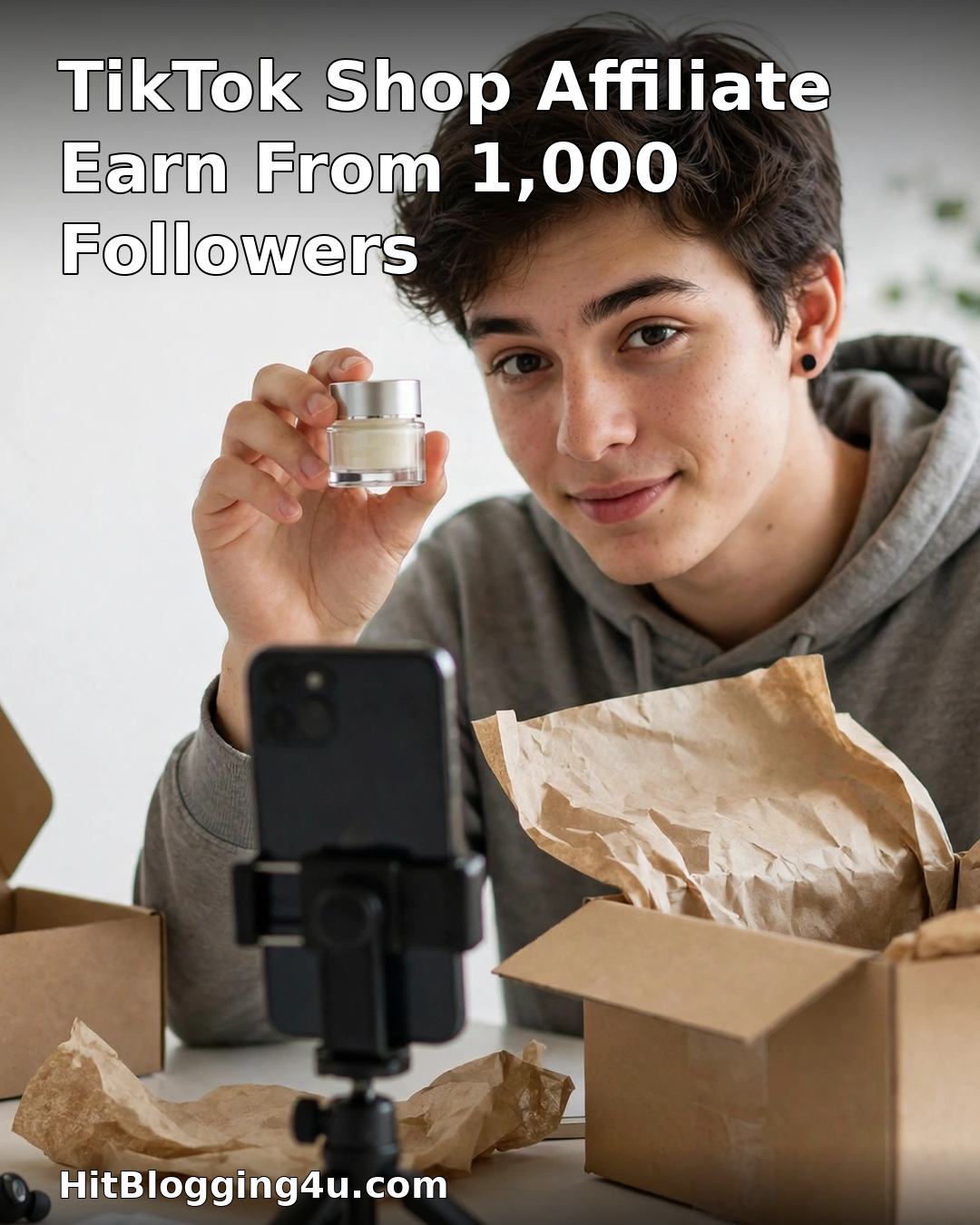
TikTok Shop lets you earn a commission when someone buys a product through a video or link you shared. In many markets the follower minimum is around 1,000, which makes it one of the earliest ways to earn. You pick products from the TikTok Shop marketplace, feature them in a video, and earn a percentage of each sale.
The trick is to promote products you actually use. A video that answers a real question — “the three things I keep in my backpack for 9 a.m. classes” — sells far better than a video that just says “buy this.” Good categories for students include dorm products, school supplies, beauty, tech accessories, fitness gear, and student apps. Always disclose that a link is an affiliate link; it is required by law in most countries, and your audience trusts you more when you are open about it. If you want the full beginner walkthrough, read our guide to affiliate marketing for beginners.
3. Land Brand Deals and Sponsored Posts
A brand deal is simple: a company pays you to create and publish a video about its product, app, or event. Brands are spending more on small creators than ever. Industry reporting shows micro and nano creators are expected to claim 45.5% of influencer marketing spending in 2026, because brands want trusted audiences, not just big numbers.
For students, your value is your niche. A brand may care less about your total follower count and more about your access to a specific campus, city, major, or student lifestyle audience. Many nano creators start pitching brands around 1,000 to 5,000 followers. A sponsored post should feel like something you would have made anyway, just with a brand involved. If your page is about dorm life, a bedding brand makes sense. If you post study hacks, an education app makes sense. Promote random products and your followers will stop trusting you.
4. Make UGC Videos for Brands (No Big Following Needed)

UGC stands for user-generated content. It means you create videos for a brand to use on its own TikTok, ads, website, or email campaigns. This is one of the best options for students because your follower count matters far less — the brand is paying for your ability to make content, not for your audience.
A UGC project might be a 30-second product demo, a dorm-room unboxing, a day-in-the-life video, or a short testimonial. Build a mini portfolio with three to five sample videos first. They do not all need to be paid work; you can film spec videos for products you already own and label them clearly as samples. Brands want to see that you understand hooks, pacing, lighting, captions, and natural delivery. You do not need a film degree — you need videos that look native to TikTok instead of like a commercial.
5. Earn From TikTok LIVE Gifts
Once you have around 1,000 followers, you can go LIVE, and viewers can send virtual gifts that convert into real money. Study-with-me sessions, Q&A streams, dorm tours, and casual chats work well for students because they are low-effort to run and build a loyal audience. LIVE income is usually small at first, but regular streams grow the community that later buys from your affiliate links and attracts brand deals.
6. Become a Campus Ambassador
Campus ambassador and campus creator roles are built for students. Brands hire students to post TikToks, share discount codes, host small events, hand out samples, and collect feedback from classmates. These roles pay a flat fee per campaign, and they are often the fastest first payment a student creator gets, because brands value your access to a campus community that a general creator cannot reach.
Look for ambassador programs from apps, food brands, beauty products, and education companies that already target students. Your student society, club, or sports team can also be a selling point — brands love creators who can genuinely reach a real group of people.
7. Sell Digital Products or Services
If your account teaches, explains, or organizes something, you can sell a simple digital product to your audience: class note templates, budget planners, dorm packing checklists, Lightroom presets, Canva templates, study guides, or a short mini-course. Digital products cost almost nothing to create and can be sold again and again.
The best products solve one specific problem. A “College Success Guide” is too broad. A “Move-In Weekend Packing Checklist for Freshmen in Dorms” is easy to understand and easy to sell. Start small — a $5 template that solves a real problem teaches you more than three months spent building a course nobody asked for. Our guide to selling digital products as a student covers the full setup.
How Many Followers Do You Need to Make Money on TikTok?
You can start earning before you feel “big enough.” Different income streams have different gates, and some need no followers at all. Here is the breakdown based on TikTok’s published requirements and current guides.
| Way to earn | Follower minimum | Other requirements |
|---|---|---|
| UGC videos for brands | None | A small portfolio of sample videos |
| Campus ambassador roles | None (often) | Active on campus, involved in student groups |
| TikTok Shop affiliate | Around 1,000 | 18+, account in good standing |
| TikTok LIVE gifts | Around 1,000 | 18+, account in good standing |
| Creator Rewards Program | 10,000 | 100,000 views in last 30 days, 18+, personal account, videos over 1 minute |
| TikTok Series / subscriptions | 10,000 | Additional eligibility rules apply |
| Brand deals | No fixed minimum | Brands usually start looking at 1,000–5,000 engaged followers |
The real question is not only how many followers you have — it is whether those followers care. A creator with 2,500 followers, strong comments, and a clear niche can be more attractive than someone with 15,000 followers and no real connection with their audience. Brands look at engagement rate, content quality, audience fit, and professionalism: replying on time, reading the brief, and meeting deadlines can put you ahead of creators with larger accounts.
Pick a Niche That Pays

The fastest way to grow — and to earn — is to pick one topic and stay in it for at least 90 days. TikTok’s algorithm needs to know who to show your videos to, and brands need to know what you stand for. Student niches that work well include study tips and exam prep, dorm life and small-space organization, campus food and budget meals, student budgeting and money tips, fitness on a student schedule, thrift fashion and game-day outfits, tech and study apps, and day-in-the-life videos.
Choose the overlap of three things: what you enjoy, what other students search for, and what brands can picture themselves in. A study-tips creator can work with stationery, apps, and laptop brands. A campus food creator can work with local restaurants and food delivery apps. A general “a bit of everything” account is much harder to grow and much harder to sell to a brand.
How to Grow a TikTok Account Around Classes
Growth is mostly consistency plus watch time. Post three to five times a week, and aim for videos people watch to the end. A 30-second video that holds attention beats a three-minute video people swipe away from in five seconds.
Use a simple weekly routine that fits a student schedule. Film in batches on one free afternoon — three or four videos in an hour is realistic once you have a format. Edit with captions, because many people watch without sound. Hook viewers in the first two seconds with the outcome, not the introduction: “Three things I wish I bought before freshman year” works better than “Hi guys, welcome back to my channel.”
Check your analytics every week and double down on what works. If dorm organization videos get twice the watch time of your vlogs, make more dorm videos. Ignore vanity numbers and watch the metrics that matter: average watch time, saves, shares, and profile visits. Saves and shares tell TikTok your video is useful, and useful videos get shown to more people.
How to Land Your First Brand Deal
Waiting for brands to find you works, but it is slow. A better move is to pitch brands you already use. Start with apps, food brands, local businesses, beauty products, dorm products, clothing brands, and campus-friendly startups. Then send a short message that gets to the point.
Here is a pitch template you can adapt:
Hi [Brand Name], I’m [Your Name], a [University] student with [X] followers creating TikTok videos about [your niche]. My audience is mostly students aged 18–24 who [what they care about]. I’d love to create a short video featuring [product] for my audience. My rate for one TikTok is $[your rate], and I can share examples of my recent videos here: [link]. Thanks for considering me!
Keep it short, name your audience, name your rate, and link your best videos. Start by charging less than you think — your first few deals are about building a portfolio and testimonials. Raise your rate after every three paid deals. And keep a simple record of every payment, because if you earn money as a student you may need to report it for tax. Check your country’s rules, and keep receipts and screenshots of every payment.
5 Mistakes That Stall Student Creators

Most student creators do not fail because of talent. They fail because of avoidable mistakes. Here are the five that stall growth and earnings most often.
1. Posting about everything. A mixed account confuses the algorithm and confuses brands. Pick one niche and give it 90 days before judging it.
2. Chasing virality instead of consistency. One viral video is exciting, but brands pay for creators who show up every week. Three videos a week for three months beats one viral video and then silence.
3. Promoting products you do not use. Your followers can tell when an endorsement is fake. One bad recommendation costs more trust than the payment was worth.
4. Ignoring the money rules. Some programs require you to be 18, and payouts usually go to an account in your own name. Never lie about your age to join a program — it can get your account banned and your earnings frozen.
5. Waiting for 10,000 followers to start earning. UGC, campus ambassador roles, and affiliate links can pay from your first month. The Creator Rewards Program is the last gate, not the first step.
Your First 30 Days: A Simple Starter Plan
Week 1 — Set up. Pick your niche, switch to a creator account, write a bio that says who you are, what you post, and that you are open to brand work, and add a contact email. Film and post your first three videos.
Week 2 — Find your format. Post four videos and test two formats — for example, a tips video and a day-in-the-life. Check which one holds watch time better, and film three sample UGC videos for products you already own.
Week 3 — Start earning. Apply for TikTok Shop affiliate with your best-performing product video, join two or three campus ambassador programs, and pitch five small brands with the template above.
Week 4 — Double down. Post your best-performing format five times, go LIVE once, and follow up on every pitch you sent. Your goal for the month is not a viral video — it is one payment, one affiliate sale, or one brand reply.
Frequently Asked Questions
Can you make money on TikTok as a student with no followers?
Yes, through UGC and campus ambassador roles, which do not require a large following. UGC pays you to create videos for a brand’s own channels, and campus ambassador roles pay for your access to a student community. Affiliate links and brand deals become realistic once you reach roughly 1,000 followers.
How many followers do you need to make money on TikTok?
It depends on the income stream. UGC and campus ambassador work need no minimum. TikTok Shop affiliate and LIVE gifts start at around 1,000 followers. The Creator Rewards Program needs 10,000 followers plus 100,000 video views in the last 30 days. Brand deals have no fixed minimum, but most brands start paying creators with 1,000 to 5,000 engaged followers.
How much does TikTok pay per 1,000 views?
TikTok does not publish a fixed rate for the Creator Rewards Program, so there is no official per-1,000-views figure. Payouts depend on qualified views, watch time, engagement, and video quality, and they vary widely between creators and niches. Treat platform payouts as bonus income and build brand deals, affiliate income, and UGC alongside them.
Is the TikTok Creator Fund still available?
No. TikTok phased out the Creator Fund and replaced it with the Creator Rewards Program. The new program only counts original videos longer than one minute, and videos must reach 1,000 qualified For You feed views before they earn anything.
Do you have to be 18 to make money on TikTok?
Most TikTok monetization programs require you to be 18 or older, including the Creator Rewards Program, TikTok Shop affiliate, and LIVE gifts. If you are under 18, you can still grow an audience and build skills, but do not misrepresent your age to join a program — ask a parent or guardian for help and check the rules for your country.
What is the fastest way for a student to earn on TikTok?
Campus ambassador roles and UGC videos are usually the fastest, because they pay a flat fee and do not require a large following. TikTok Shop affiliate links can also pay quickly if you already have an audience that trusts your recommendations. The slowest path is waiting to qualify for the Creator Rewards Program.
Your Next Step
Making money on TikTok as a student is a slow build, not a lottery ticket. Pick one niche, post three to five times a week, and start with the income streams that do not need a big following — UGC, campus ambassador roles, and affiliate links. Add brand deals once you have proof you can hold an audience, and let the Creator Rewards Program arrive when your account qualifies.
Your first payment might be $25 for a UGC video or $50 in affiliate commissions. That is not small — it is proof the system works. Keep going for 90 days, and the account that started as a side hustle between lectures can become a real income stream. If you want a second platform to compare, see how students earn on YouTube in our guide to making money on YouTube as a student.