

You do not need experience, a degree, or a CV full of past jobs to earn money from home as a student. Thousands of students earn their first online income every month from work from home jobs for students with no experience — tutoring, writing, testing websites, virtual assistant work, transcription, and more. The catch is that not all of these jobs pay the same: some pay $20 an hour, others pay about $2 an hour, and a few are scams dressed up as opportunities.
This guide lists 10 legit work from home jobs for students with no experience, with honest pay for each one, what the employer actually checks before hiring you, and how to get paid. Pick one, follow the 7-day plan at the end, and you can land your first paid task within a week.

What “No Experience” Really Means
When a job says “no experience required”, it does not mean “no effort required”. It means three specific things:
- No degree required. Nobody asks for your qualifications. A first-year student can apply on the same terms as a graduate.
- No professional background needed. You do not need a previous job in the field. Most of these platforms train you as you go.
- No advanced skills upfront. You need basic skills you already have — typing, reading, communicating clearly, following instructions.
What employers check instead of experience is different, and knowing it in advance is half the battle: a typing test, a short skills assessment, a sample task, a background check, or a place on a waitlist. Some roles also have equipment rules — a Windows PC, wired internet, a headset. This guide tells you what each job checks, so you never waste an application on a role you cannot pass.
Compare All 10 Jobs at a Glance
| Job | Realistic pay | What they check | Open worldwide? |
|---|---|---|---|
| Online tutoring | $10–$25/hour | Subject test, short video intro | Mostly yes (Preply); some platforms limited |
| Freelance writing | $15–$25/hour to start | 2–3 writing samples | Yes |
| Website & app testing | $10–$30 per test | Practice test, microphone check | Mostly yes |
| Virtual assistant | $10–$20/hour | Short trial task | Yes |
| Transcription | $10–$15/hour effective | Transcription test | Yes (GoTranscript, 140+ languages) |
| Chat support | $12–$20/hour | Typing test, assessment, background check | Varies by company |
| Data entry | $10–$15/hour | Typing speed test | Yes |
| Microtasks | About $2/hour | Usually nothing | Yes |
| Selling digital products | $0–$200+/month, grows over time | Nothing — you are the seller | Yes |
| Paid surveys | $3–$6/hour | Profile questions only | Yes, but pay varies by country |
The pattern is clear: jobs that need a skill you can prove — tutoring, writing, testing — pay three to ten times more per hour than jobs anyone can do, like surveys and microtasks. Start with a higher-paying job if you can; use the low-paying ones only to fill dead time between classes.
The 10 Jobs, Explained
1. Online Tutoring — $10–$25 an Hour
Tutoring pays the best of any no-experience student job because you are selling knowledge you already have. English conversation tutoring is the easiest entry point: Cambly pays a flat $0.17 a minute, about $10 an hour, with no degree or experience required. Preply lets you set your own rate, usually $10–$15 an hour to start, and works in almost every country.

You need a quiet room, a webcam, and a headset — and the confidence to talk to a stranger for 30 minutes. Platforms test you with a short subject quiz and a two-minute video introduction, not a degree certificate. Our guide to becoming an online tutor as a college student walks through the platforms, the rates, and how to get your first bookings.
2. Freelance Writing — $15–$25 an Hour to Start
Freelance writing has the highest income ceiling on this list for a beginner. Brands and blogs pay for blog posts, product descriptions, and social media captions, and most of them care about your sample writing, not your CV. Two or three strong sample pieces — written for free, on topics you know — are your application.
Start on Fiverr or Upwork with short, specific gigs: “I will write a 500-word blog post on student life” beats a vague “I write anything”. Expect $15–$50 per article at first, rising to $200–$800 a month once you have reviews. If you have never freelanced before, our guide to starting freelancing as a student with no experience covers choosing a skill, finding clients, and setting your first rate.
3. Website and App Testing — $10–$30 Per Test
Companies pay real people to click through their websites and apps before launch and talk out loud about what confuses them. A typical test takes 20 minutes and pays $10, with longer tests paying $30 or more. UserTesting is the biggest platform; you pass a short practice test and a microphone check, and then tests arrive when they match your profile.

This is the fastest job on this list to start — you can do your first paid test the same day you sign up — but the work is irregular. Treat it as a bonus on top of a steadier job, not your main income. A clear voice, honest opinions, and a working computer are the only requirements.
4. Virtual Assistant — $10–$20 an Hour
Virtual assistants handle the small jobs busy people do not have time for: scheduling, inbox management, research, data organisation, booking travel. It suits organised students who are good at following instructions and replying fast. Most clients give you a short trial task first — organising a spreadsheet, drafting three emails — and hire you if the work is clean.

Find VA work on Upwork, Belay, and Time Etc, or pitch directly to small business owners and bloggers. The work is flexible and the hours are steady once you have two or three regular clients, which makes it one of the best jobs for fitting around a class timetable.
5. Transcription — $10–$15 an Hour Effective
Transcription means typing out audio recordings — interviews, podcasts, lectures, meetings. Rev pays up to $1.75 per audio minute and GoTranscript hires in 140+ languages, but both make you pass a transcription test before you get any paid work, and GoTranscript currently runs a waitlist for new sign-ups.
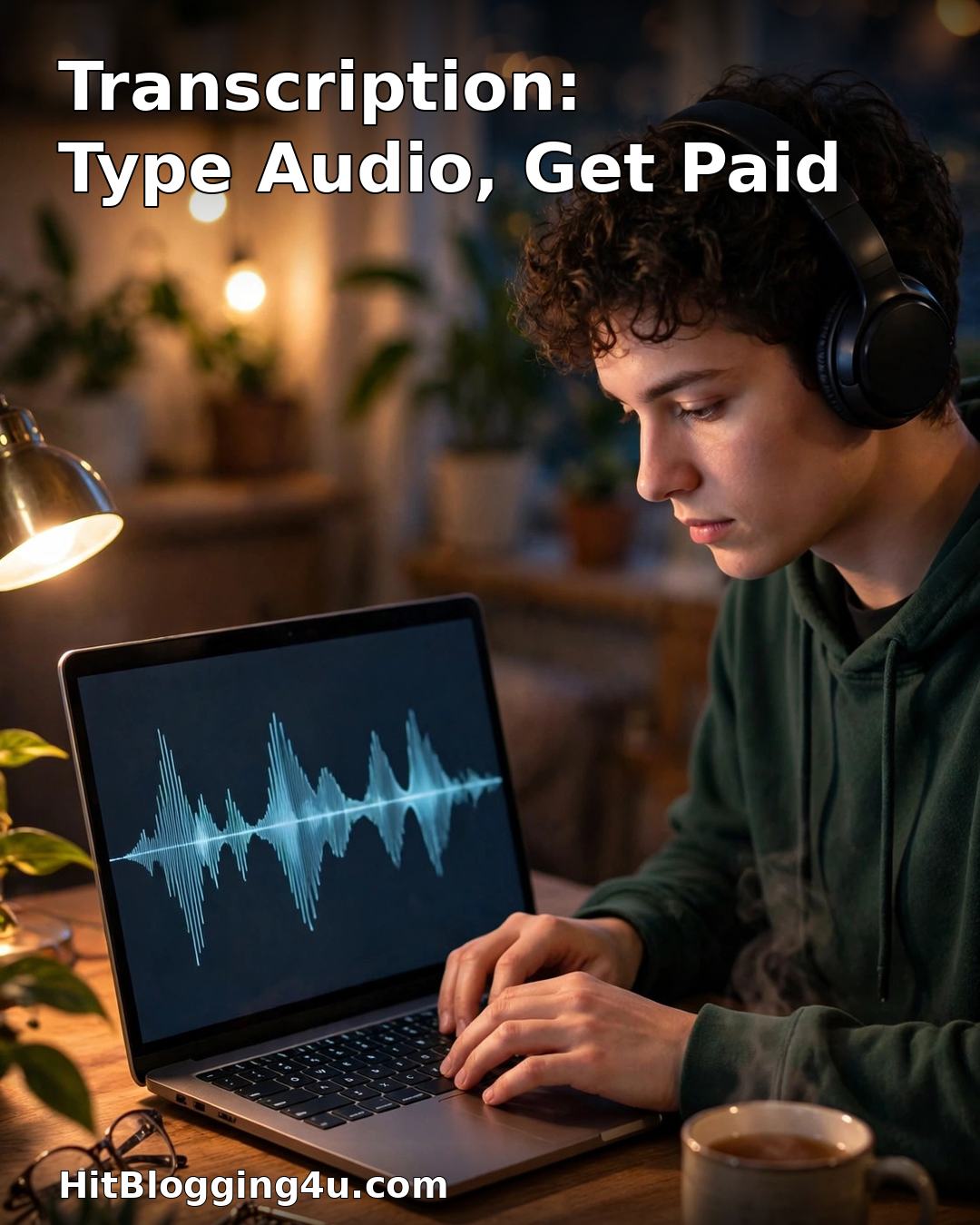
Your real hourly rate depends on your typing speed and accuracy: fast, accurate typists earn $10–$15 an hour, slow typists earn far less. If you type at 60+ words a minute and can focus for an hour without drifting, transcription is steady, honest work you can do late at night.
6. Chat Support — $12–$20 an Hour
Chat support agents help customers through live text chat — no voice calls, no phone. Big employers like Foundever, Transcom, and TTEC hire beginners and offer paid training, but read the fine print: many postings ask for a typing test of 30+ words a minute, a computer skills assessment, and a background check, and some phone roles require wired internet and ban Wi-Fi and hotspots.
The pay is reliable and the hours are fixed, which suits students who want a predictable schedule. Apply only to roles that match your setup — if you only have Wi-Fi, skip the listings that demand a wired connection.
7. Data Entry — $10–$15 an Hour
Data entry is simple, repetitive work: converting PDFs to Word documents, entering figures into spreadsheets, cleaning up lists. Clients on Fiverr, Upwork, and Clickworker post these jobs constantly, and the only test is usually a typing speed check.
The pay is modest and the work is boring, but it is real, it needs no interview, and it is a good first job while you build skills for something better. Be careful here: data entry has more scams than any other job on this list. If a “data entry job” asks you to pay a registration fee or buy a starter kit, it is a scam — see the red flags section below.
8. Microtasks — About $2 an Hour
Microtask platforms like Clickworker and Amazon Mechanical Turk pay a few cents per tiny task: categorising images, checking search results, short surveys. A 2018 study found median pay on Mechanical Turk worked out to roughly $2 an hour, with only 4% of workers earning more. That is the honest number, and it has not improved much since.
Microtasks are worth doing only in dead time — waiting for a bus, between lectures — and never as your main income. If a platform promises $20 an hour for microtasks, it is lying. Spend the same hour on tutoring or writing instead and you earn ten times more.
9. Selling Digital Products — $0–$200+ a Month
This is the only job on the list where you build something once and sell it many times: study notes, Notion templates, planners, resume templates, flashcards, printables. Notes and guides sell for $5–$15, simple printables for $3–$9, and Notion templates for $7–$19. Gumroad takes a 10% fee and works globally; Etsy is best for templates and printables.
The first month usually earns nothing — you are building the product and the listing. But a good template keeps selling for months with no extra work, and it is the closest thing on this list to passive income. Only sell original work you made yourself, and start with one product, not ten. Our guide to selling digital products as a student covers platforms, pricing, and realistic earnings in detail.
10. Paid Surveys — $3–$6 an Hour
Paid surveys are the easiest job to start and the worst-paid one on this list. Realistic earnings are $20–$100 a month for active users, and the best-paying sites — Prolific and Pinecone — pay the equivalent of $8–$12 an hour because they pre-match you to surveys. Most other sites pay $0.50–$3 per survey, and 20–30% of surveys screen you out unpaid halfway through.
Surveys are worth it only for pocket money in time you would otherwise waste. Never pay to join a survey site, and remember that PayPal accounts usually require you to be 18 or older — under-18s should check the payout rules before spending hours on a site. Our full verdict on whether paid online surveys are worth your time breaks down the hourly math site by site.
How to Get Hired With No Experience
Getting hired is a process, not a lottery. Follow it in order and your odds jump:
- Pick one job, not ten. Apply to one type of work and get good at its test. Students who apply everywhere get hired nowhere.
- Prepare the proof. Writers need 2–3 samples. Tutors need a 2-minute video intro. Transcribers need a typing speed of 60+ words a minute — test yourself free on a typing site first.
- Pass the test on the first try. Most platforms let you retake a failed test only after weeks. Read the instructions twice, do the practice test, and take the real one when you are fresh.
- Apply to two or three platforms at once. Waitlists are common — Rev, GoTranscript, and Prolific all run them — so a second application keeps you moving while the first one waits.
- Take the first job, even at a low rate. Your first five-star review is worth more than your first paycheck. Rates rise fast once you have proof you deliver.
How Students Actually Get Paid
Getting the job is only half the story — getting the money is the other half, and students get tripped up here more than anywhere else:
- PayPal is the most common payout method, but you usually need to be 18 or older to hold an account. If you are under 18, check whether a parent can receive payments for you, or pick platforms that offer alternatives.
- Payoneer works in 190+ countries and plugs straight into Upwork, Fiverr, and several survey and transcription platforms. It is the best option for students outside the US and UK.
- Direct bank transfer is offered by some tutoring and support employers — ask before you apply, not after you are hired.
- Watch the fees. A $10 test payout can lose $2–$3 to transfer and currency fees. Batch your withdrawals instead of cashing out after every job.
- Keep records. In most countries, side-hustle income is taxable even for students. Set aside 20% of what you earn and keep a simple record of every payment.
Scam Red Flags: The 30-Second Check
Scammers target students on purpose, because you are new to this and short on cash. The rule is absolute: a legitimate job never asks you to pay to start — not for training, not for a starter kit, not for registration, not for a “refundable deposit”. Run this check on every listing before you apply:
- Payment demanded upfront — walk away immediately, whatever the excuse.
- Pay promises far above the market — $50 an hour for data entry or $20 an hour for microtasks is a lie.
- No company name, no website, no reviews — real employers have a footprint you can check in 30 seconds.
- Contact only on WhatsApp or Telegram — legitimate hiring happens on the platform or by email, not in a chat app.
- Pressure to decide today — real jobs do not expire in an hour.
Our guide to spotting and avoiding freelance job scams covers the full list of warning signs with real examples. If a job fails even one check, skip it — there are plenty of real ones on this list.
Your First 7 Days: From Zero to First Paycheck
Day 1: Choose your job. Pick one from the table above — tutoring if you are strong in a subject, writing if you like words, testing if you want the fastest start. Write down why you picked it.
Day 2: Prepare your proof. Record your 2-minute video intro, write two sample pieces, or test your typing speed. Prepare once, reuse everywhere.
Day 3: Apply to two platforms. Complete both applications fully — half-finished applications are never reviewed.
Day 4: Pass the tests. Take the practice test first, then the real one while you are fresh and undisturbed.
Day 5: Set up payment. Create your Payoneer or PayPal account and confirm it works before your first job lands.
Day 6: Take the first task. Accept the first paid task that fits, even at a low rate. Deliver it early and ask for a review.
Day 7: Review and repeat. What worked? What was slow? Apply to one more platform and schedule next week’s hours like a class.
Frequently Asked Questions
Can students get online jobs with no experience?
Yes. Many entry-level online jobs are designed for beginners — tutoring, website testing, transcription, virtual assistant work, and data entry all hire students with no experience. What they check instead is a short test, a sample task, or a video introduction. Pick one job, prepare for its test, and apply to two or three platforms at once.
Which online job pays the most for students with no experience?
Online tutoring and freelance writing pay the most, at $15–$25 an hour to start and $40–$60 an hour once you have reviews. Website testing pays $10–$30 per 20-minute test but the work is irregular. Surveys and microtasks pay the least, at roughly $2–$6 an hour, and should only fill dead time.
How much can a student earn working from home?
A student working 5–10 hours a week can realistically earn $100–$250 a week from tutoring or freelance writing, or $15–$30 a week from surveys in the same hours. The job you choose matters far more than the hours you put in, so pick a high-paying job first and use low-paying ones only in spare minutes.
Do I need a degree to work from home as a student?
No. None of the 10 jobs in this guide require a degree. Tutoring platforms check your subject knowledge with a short test, writing clients check your samples, and testing platforms check your microphone and a practice test. Your grades in a subject matter for tutoring, but a degree does not.
How do students get paid for online jobs?
Most platforms pay through PayPal or Payoneer. PayPal usually requires you to be 18 or older, while Payoneer works in 190+ countries and connects directly to Upwork, Fiverr, and several survey and transcription sites. Some employers also offer direct bank transfer. Set up your payment method before your first job, and batch withdrawals to cut down on fees.
Are work from home jobs for students legit or scams?
Most are legit, but scams are common and they target students deliberately. A real job never asks you to pay to start — no training fee, no starter kit, no registration fee. Be suspicious of pay far above the market rate, employers with no website or reviews, hiring that happens only on WhatsApp or Telegram, and pressure to decide today. If a listing fails any of these checks, skip it.
Work from home jobs for students with no experience are real, and the best time to start one is while you are still studying — the hours fit around classes, the skills compound into your career, and your first five-star review is the start of a rate that keeps rising. Pick one job from the list, follow the 7-day plan, and run your first paid task this week. Your degree comes first, so cap your hours during exam season — but the rest of the year, those spare hours can pay for themselves.